From the point of view of interface design, the routine business of urban life offers the dual benefit of being a data source that can be mined and a channel that can be utilised to sell services based on the exploitation of that very data. As such, cities have become the perfect lubricant for the global distribution of technologies that attract investment in change. There is an urgent need to better understand how these processes have transformed not only the built environment but also urban social life and politics, engendering a new art of city-making in which "today’s movements from below might be potentially constituted in and through finance".[1] A clear indication for this is the shifting composition of capitalist expansion toward knowledge-based creative ventures, be it cloud-based software, social media, mobile applications or similar devices. Cities around the world are outcompeting each other to attract a strong talent pool of young creatives and innovators in the hope that venture capital will follow in their wake, resulting in crops of fast-growing companies. A case in point for this significant development is the phenomenal rise of WeWork, a real estate company valued like a tech company, to become a USD 47 billion company in just ten years, managing around 10,000,000 square feet (approximately 930,000 square metres) of office space in more than 100 cities worldwide and its subsequent rebranding as The We Company in 2019. WeWork has become the world’s single largest operator of temporary workspaces and has taken the venture-capital market by a storm. As the leading provider of enticingly new “urban sociomaterial infrastructures”[2], and thus in the possession of enormously attractive know-how about changing work patterns, as well as a highly successful start-up in its own right, the company has established itself as the much courted darling of city mayors and planning directors. Getting WeWork to expand its reach into their cities is viewed as a proven way to capture the zeitgeist and to jump-start regeneration-by-hip-entrepreneurialism in their locales, too.
However, in order for a city to be considered fertile ground for generating new profit streams through the clustering of a highly skilled young demographic, it has to be perceived as matching the expectations of that particular target group. Consequently, new types of city-making have arisen to create a better fit with the millennial mindset: urban development centred on innovation hubs that cater to millennials’ quest to access global networks; co-working and co-living spaces that meet their desire for collaboration and communication; crowdfunded civic projects that reflect their pursuit of a unique contribution to urban neighbourhoods, environmentally conscious and playful urban schemes that acknowledge how important purpose and passion are for digital nomads; and innovative modes of urban infrastructure available at one’s fingertips that echo their penchant for enriched experiences and an enhanced life-work balance. A round-up of quotes from high-profile investment managers in a Reuters news article seeking to analyse the global real-estate market’s mounting envy of WeWork’s appeal highlights how these once niche sentiments have become accepted as the guiding rationale for urban economic development: No longer simply the domain of wage-earning labour, urban workplaces are now framed as cultural hubs triggering and serving the formation of communities – “we want everything, everywhere, all the time”, because “talent is calling the shots” and “culture is the new capital”.[3]
These patterns of city-making perform like sets of competing asset classes, offering different opportunities for engagement for different investors and contributing to the emergence of highly volatile and complex “financescapes”.[4] A willingness to invest one-self in this volatile ‘financescape,’ destabilising the boundary that separates life from ‘reliable’ work, relates to what Gina Neff has identified as the growth of ‘venture labor’ in the ‘Dot-Come Era’ or Internet Boom in the New York’s ‘Silicon Alley’ in the late 1990s. This is a labor she defines as ‘the investment, time, energy, human capital and other personal resources that ordinary employees make in the companies where they work {…} people taking risk for their jobs, as much as it is about their subjective embrace of that risk’ . [5]
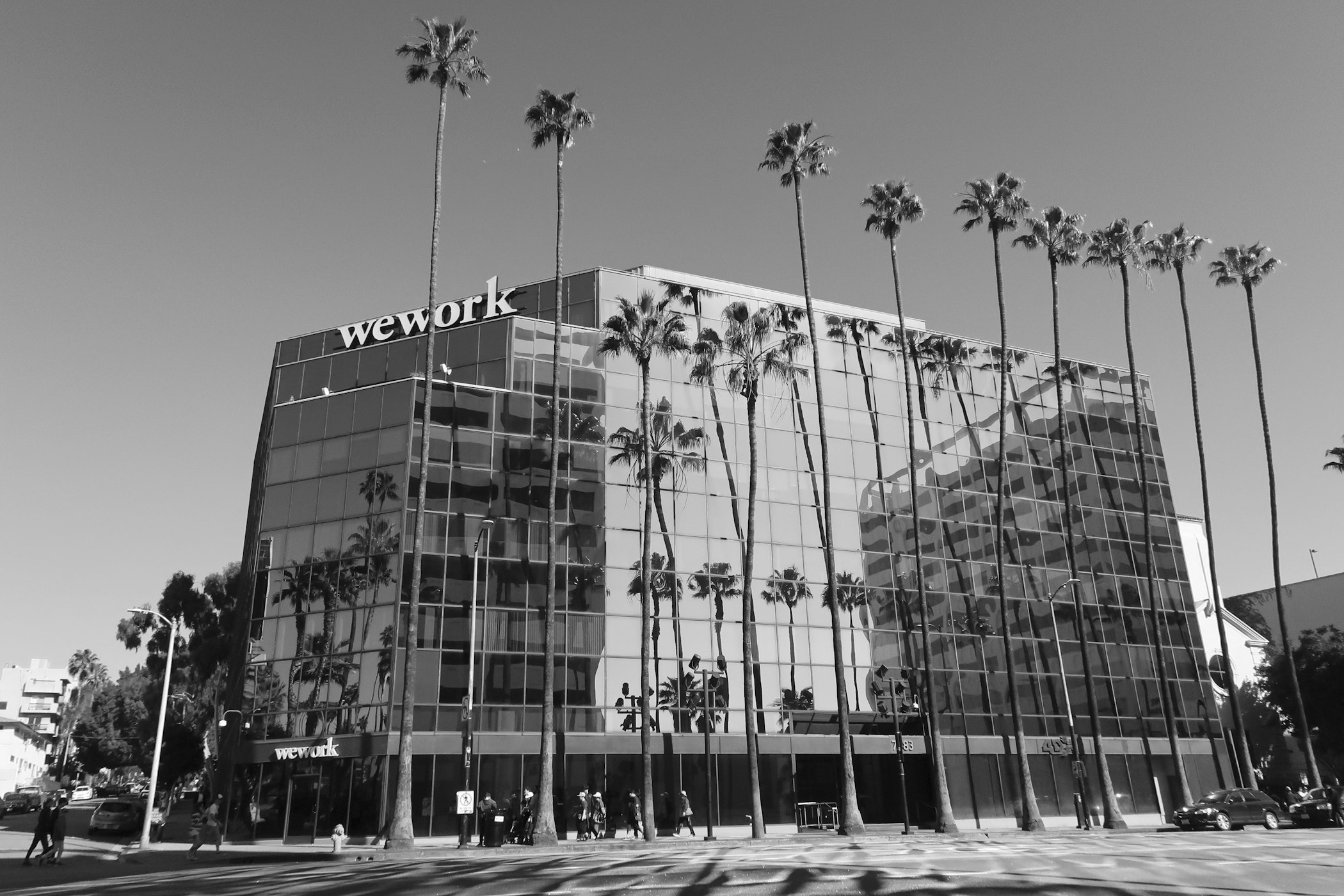
WeWork, West Hollywood, USA
Start Up Containers
Comments